


Blog

Do You Have A "Simple" Tax Return?

Posted by Keith Huggett on Mon, Feb 11, 2013 @ 09:02 AM

Using the Incorrect Tax Form Can Cost You

Author: Keith Huggett 

tax formsWhat qualifies as a "simple" tax return? Are you certain that you know? Are you using the correct form? Do you need to use the 1040EZ, the 1040A, or the 1040? There are special qualifications for the use of each form, and if you use the incorrect one when filing your taxes it can cost you.

The simplest form is the 1040EZ. To qualify to use the 1040EZ:

  • Your filing status is either single or married filing jointly.
  • You and your spouse (if married) are both under age 65.
  • Neither you nor your spouse are legally blind.
  • You have no dependents.
  • Your interest income is less than $1,500.
  • Your income, singly or combined, is under $100,000.
  • You cannot have income and expenses from self employment nor can you received 1099-Misc forms.
  • The only credit you can claim is the Earned Income Credit and Federal Income Tax Withholding.

The 1040A is a little bit less strict. You can file the 1040A using any of the 5 filing status options: single, married filing jointly or separately, qualifying widow(er), or head of household. The following qualifications apply to the 1040A:

  • Your taxable income, or combined incomes is below $100,000.
  • You have capital gain distributions, but no other capital gains or losses.
  • You do not itemize deductions.
  • You may make adjustments to income for educator expenses, IRA deductions, student loan deductions and tuition and fees.
  • You may claim the following credits:
    1. The Child and Dependent Care Credit
    2. The Credit for the Elderly or Disabled
    3. Education Credits
    4. Retirement Savings Contribution Credit
    5. Child Care Tax Credit
    6. The Earned Income Tax Credit
    7. Additional Child Tax Credit
  • You did not have an AMT tax adjustment on stock you acquired from the exercise of an incentive stock option.

If you cannot use form 1040EZ or form 1040A you must use form 1040. You can use form 1040 to report all types of income, deductions and credits. By this time, we are no longer talking about a "simple" tax return.

The tax specialists at The Tax Office, Inc. take the extra time to discuss with your business and personal plans for the future. We talk about what your financial outlook happens to be in order to be certain that every deduction and credit is applied to your return. With proper tax planning in place, we can assist you with attaining your goals.

Topics: Keith Huggett, tax forms

Tax Preparation: Avoid These All Too Common Filing Errors

Posted by Keith Huggett on Thu, Feb 7, 2013 @ 08:02 AM

Mistakes Can Flag You for an Audit!

Author: Keith Huggett

tax preparationA lot goes into tax preparation, especially if you have a small business. Many large issues, like mixing personal and business deductions or making mistakes with payroll taxes, can be significant red flags that increase your risk of an IRS audit. On the other hand, there are a number of small errors that you can make that can cause just as much trouble. Here are a few common errors you should be on the lookout for:

  • Matching numbers: The IRS frequently checks your return against informational returns like 1099, 1098 and W-2 forms. If they don't match, it becomes a red flag.
  • Correct filing status: If you claim the "Married Filing Jointly" status but are single, you can probably expect a call or letter from the IRS.
  • Accurate name and Social Security number: Your return can be refused if your name does not match the name on your Social Security card. Entering an incorrect Social Security number or filing a return without one could also lead to a rejection.
  • Correct calculations: If you make a math error anywhere on your return, it could have a significant impact on your bottom line. Even if you don't catch it, the IRS probably will.
  • Complete packages: When you file your return, remember to enclose every attachment and to collate the forms together in the correct order as determined by the "attachment sequence" number printed on each form's front face.
One of the benefits of working with a firm like The Tax Office, Inc. is that they have advanced tax preparation software to help ensure that many of these small filing errors do not crop up. At the same time, they also have experienced tax professionals who can help protect you from making the larger errors as well.

Topics: Keith Huggett, tax preparation

13 Critical Mistakes to Avoid When Being Audited by the IRS or State

Posted by Keith Huggett on Tue, Feb 5, 2013 @ 09:02 AM

Three Types of IRS Audits and How to Prepare for Them

Author: Keith Huggett 

If you’ve received the letter most tax payers dread – correspondence from the Internal Revenue Service - what you do next and how you handle this correspondence can set the results for or against you.

individual auditThere are 3 types of audits. A correspondence audit is really just a letter asking for more information or clarification as to why something was or was not included. An office audit means that the IRS would like you to come in to their office to review certain financial matters

A field audit means that an agent will be coming out to visit you. This is the most serious type of audit and you should get professional representation immediately

Unfortunately, people make critical mistakes during the audit process. Here’s a list of the top 13:

  1. Ignoring the audit notice
  2. Not reading the audit notice carefully.
  3. Bringing more records and documentation to the audit than requested
  4. Lack of preparation and organization
  5. Arguing with the auditor, even if they're being unreasonable.
  6. Deliberately lying during an audit 
  7. Giving only copy of original documents to the IRS. 
  8. Make it hard for the auditor
  9. Beginning the audit interview with a chip on your shoulder,
  10. Volunteering information that hasn’t been requested
  11. Coming to the audit with missing records
  12. Not understanding or knowing rights
  13. Not bringing your accountant with you


If you get a notification of an audit from the IRS don’t panic! Preparation for dealing with your audit starts with the most  critical step – get professional representation firm a qualified firm like the Tax Office.  

Contact us here, or call us at 916.773.7053916.773.7053. for an immediate, no obligation confidential discussion of your situation.

Topics: Keith Huggett, audit

The Taxpayer Relief Act Aids Business in The Northeast & The Islands

Posted by Keith Huggett on Wed, Jan 30, 2013 @ 09:01 AM

Business in the Islands Gets a Boost

Author: Keith Huggett 

new york liberty zoneContinuing our travels through the Taxpayer Relief Act of 2012, we head to the the big state of New York and the islands of American Samoa and San Juan, before we return to the states to visit mining country.

In New York City, the Taxpayer Relief Act extends the time allowed for issuing bonds for the New York Liberty Zone. The New York Liberty Zone is an area around the site of the World Trade Center, on or south of Canal Street, East Broadway (east of its intersection with Canal Street), or Grand Street (east of its intersection with East Broadway) in the Borough of Manhattan in the City of New York. The purpose of these bonds is to help boost areas originally damaged back on that fateful day in 2001.

In American Samoa, the Act has extended and modified the credit allowing for income from active business operations earned through tax years beginning before January 1, 2014 and now makes it available to all qualifying manuafacturing businesses operating in American Samoa.

In Puerto Rico, the Act extends for two years, through tax years beginning before January 1, 2014, the provision extending the section 199 domestic production activities deduction. From January 1, 1012 through December 31, 2013, The provision for paying $13.25 per gallon to cover over a $13.50 per proof gallon excise tax on distilled spirits imported into the United States from Puerto Rico and the Virgin Islands has been retroactively extended.

And, finally, back in mining country, for tax years beginning after December 31, 2011 through tax years beginning before January 1, 2014, the credit for the training of mine rescue teams has been retroactively extended. The Act also extends for two years retroactively from January 1, 2012 through December 31, 2013 the provision that provides businesses with 50% bonus depreciation for certain qualified underground mine safety equipment.

These may not seem like big improvements to all of us, yet to someone in that particular field, it may seem like a great deal, or maybe just a small handout from the government, given to make peace. In a country as big as ours, with demands left and right it has to be hard to keep everyone happy.

Should you have any questions about your taxes, and how the Taxpayer Relief Act has an impact on you, please contact us. The Tax Office Inc., specializes in pro-active tax planning, tax preparation, tax representation, and many other services.

Topics: Keith Huggett, tax payer relief act

What’s Going to Trigger an IRS Audit of Your Personal Tax Return?

Posted by Keith Huggett on Mon, Jan 28, 2013 @ 10:01 AM

Get Professional Tax Representation to Solve Your IRS and State Tax Problems

Author: Keith Huggett 

While the IRS does not share the specific parameters that trigger audits, certain areas of the return are more susceptible:

  •  If you have a sole proprietorship you are more likely to be audited
  • If your charitable contributions are a higher percentage of your income than is standard for your income level, actually if any of the various itemized deductions are significantly high for your income level, it could trigger an audit.
  • personalauditYou might be "audit bait" if any of your itemized deductions are significantly higher for you then they have been in the past.
  • If you have previously been audited for unreported income for which the IRS has received 1099 or other income statements, or if the IRS has audited you in the past and had significant changes to your return as filed, you are more likely to come under their scrutiny again.
  • There are also compliance audits which are just about being randomly selected by the IRS.
  • You could have been reported for a specific violation by a disgruntled employee, co-worker, or business partner. 


Don’t panic if you get a notification of an audit from the IRS! The first step – get professional representation firm a qualified firm like the Tax Office. A professional who is meeting with the IRS for your benefit will keep calm and focused on the matter at hand, the tax matters, and tax decisions made

Contact us here, or call us at 916.773.7053916.773.7053. for an immediate, no obligation confidential discussion of your situation.

Topics: Keith Huggett, audit

Extensions For Your Business From The Taxpayer Relief Act

Posted by Keith Huggett on Thu, Jan 24, 2013 @ 09:01 AM

How the Relief Act is Working for Businesses, Part 2

Author: Keith Huggett 

business relief In continuation of our series on the American Taxpayer Relief Act of 2012, we are discussing the extensions made solely for businesses. Out of the thirty one provisions made, we have covered a total of six.  In this article we will be covering another five provisions having to do with industries for 2012 through 2014.

  • For Regulated Investment Companies, treatment of certain dividends have been modified. For tax years beginning after December 31, 2011, through tax years ending before December 31, 2014, a provision allowing a regulated investment company (RIC) under certain circumstances, to designate all or a portion of certain dividends as an "interest-related dividend" or a "short-term capital gain dividend."  

  • The Act also extends retroactively from January 1, 2012 through December 31, 2013 the inclusion of a RIC within the definition of a "qualified investment entity" under the Foreign Investment in Real Property Act (FIRPTA) rules.

  • The Act extends retroactively from January 1, 2012 through December 31, 2013, the special rules for interest, rents, royalties and annuities received by a tax-exempt entity from a controlled entity.

  • The Research and Development Creat has been reinstated retroactively from January 1, 2012 through December 31, 2012. The Act also modifies rules for taxpayers under common control and rules for computing the credit when a portion of a trade or business changes hands.

  • Empowerment Zones were extended for two years, through December 31, 2013.  Businesses and individual residents within "empowerment zones" are eligible for special tax incentives. An "empowerment zone" is an area of certain economical depressed census tracts.

There are twenty-two additional provisions which will be covered in future articles. We hope you will look for them.

As tax laws change, we all need to adjust with them. Pro-active tax planning is the key to keeping ahead, or even abreast of the rapid changes. The specialists at The Tax Office Inc., are there, to help you with your tax planning, tax preparation, or just answering any questions you may have about the new tax laws. Contact us today.

Topics: Keith Huggett, tax payer relief act

Business Extensions From The Taxpayer Relief Act of 2012

Posted by Keith Huggett on Tue, Jan 22, 2013 @ 09:01 AM

How The Relief Act is Working for Business, Part One

Author: Keith Huggett 

tax reportsThe Taxpayer Relief Act had a lot more of an effect on business than just affecting the payroll department. In total there were thirty-one General Business Provisions made in the Act.  This list does not include the additional provisions made for Unemployment, Energy, Healthcare, or other departments.

This series of articles will cover the Business Provisions in increments of five - six at a time, as the information is daunting and important to reflect upon as it applies to your business. Each provision will not apply to every business out there, however they are all important on their own.

  • The Work Opportunity Tax Credit (WOTC) was extended for individuals who began to work for their employers prior to January 1, 2014.  The WOTC allows employers who hire qualified veterans to get a credit against income tax by using Form 5884 of a percentage of a specified amount of first-year wages. The qualified veterans must belong to a targeted group which include qualified recipients of aid to families with dependent children, qualified ex-felons, former "high-risk youths", vocational rehabilitation referrals, qualified summer youth employees, qualified food stamp recipients, qualified SSI recipients, hong-term family assistance recipients, certain unemployed veterans, and certain disconnected youths.

  • The New Markets Credit has been extended through 2013 to allow a maximum annual amount of $3.5 billion per year of qualified equity investments to acquire stock in a community development entity (CDE). A CDE is any domestic corporation or partnership whose primary mission is servicing or providing investment capital for low-income communities or low-income persons, that maintained accountability to residents of low-income communities through representation on governing or advisory boards of the CDE, and was certified by the Treasury as an eligible CDE.

  • The cost recovery period for depreciation of certain real property improvements: restaurants, leaseholds, and/or retail stores, that have been placed into service prior to January 1, 2014 has been retroactively extended from January 1, 2012 through December 31, 2013.

  • New rules have been created for qualified small business stock. The Act extends the 100% exclusion of gain from the sale of qualified small business stock to qualified stock purchased after December 31, 2011 and prior to January 1, 2014 and held for more than 5 years.

  • There has been a reduction in the S corporation recognition period of built-in gains tax. The extension reduces the five year holding period for sales in tax years beginning in 2012 and 2013.  The Act also clarifies the rules regarding carryforwards and installment sales.

  • Special rules for S corporations making charitable donations of property were also created by the Act. It allows that for tax years beginning after December 31, 2011 through January 1, 2014, S Corporation shareholders can take into account their pro-rata share of charitable deductions even if those deductions would exceed the shareholder's adjusted basis in the S corporation.

Additional modifications to business credits will follow in upcoming articles. Be sure to check for them in the next weeks.

Each adjustment to the tax law applies to businesses differently depending on your business structure, your investments, and your business plan.  The tax professionals at The Tax Office, Inc. are available to answer any questions you may have regarding how the recent changes in tax law may affect your personal or business taxes.


Topics: Keith Huggett, tax payer relief act

Choosing Your Tax Preparer

Posted by Keith Huggett on Thu, Jan 17, 2013 @ 11:01 AM

Getting What You Pay For

Author: Keith Huggett 

taxes, taxIt's tax season again and the air waves are filled with advertisements for tax preparers. Everyone needs to have their taxes prepared but how to choose which service is the right one for you?

When you are choosing a tax preparer there are certain qualities you want to consider. What do you want to take away from the experience?  A correctly filed tax return? Most certainly! But that should not be the only criteria used to make your decision. While cost is also a factor, it too should not be the only factor weighing in.

While some firms offer you a speedy return, or an RAC (a return advancement check) for what seems to be a low cost initially, that low cost may come back to hurt you later in the form of hidden fees or missed deductions. RAC's used to be called an RAL, or a Return Advancement Loan. 2012 is the last year that these loans are available so most firms have chosen to change the form of the advance to a check instead of the loan.  Instead of loaning you your return money at a high rate of interest, your return is put into a temporary bank account, in the form of a debit card, which you use until the card is emptied and the account is closed. Fees are accrued when you open the account, or if you try to transfer the balance to a different account, called a closing fee. After opening the account, using the card until empty causes no additional fees. It is in your best interest to look into direct deposit for your refund rather than an RAC, as it takes as little as 8-10 days now for direct deposit to take effect, rather than paying a $30-$35 service charge on top of the charge for the return.

If you have questions about your taxes, and like to play a part in your tax life, the cost of your return tends to go up.  Tax planning costs a little extra. Do you like to spend an hour or more with your tax professional going over your return? Do you discuss what deductions are available to you? Or do you just accept what your prepared tells you? Here's your return, you owe $200, do not pass Go!  Time spent with your tax preparer discussing your year, what you did, what you can do differently next year could be what sets the bar between one business and another. Customer service, tax knowledge, knowing exactly what your client needs is the difference between a good tax preparer and a great one.

All of these criteria should be applied when choosing a tax preparer. It may cost a little more, but remember: A little knowledge goes a long way, and you get what you pay for.

At the Tax Office, Inc., we will gladly review your prior year returns to be certain that they were filed properly, and make the corrections if there were errors. For your tax needs, please contact us today.


Topics: Keith Huggett, tax preparation

Storage and Maintenance of your Tax Documents

Posted by Jenny Shilling on Mon, Jan 14, 2013 @ 09:01 AM

What Do You Do With All Those Papers?

Author: Jenny Shilling 

tax documentsMaintaining orderly records is very important. Keeping your original documents and only sending copies out to your tax, legal, or other professionals cannot be stressed enough. Though all professional services strive to provide you with perfection, papers do get lost, misfiled, or even shredded by accident.
With the current "paperless" trend, companies have moved most of their accounting, billing, etc., into the cloud. Bank statements, credit card statements, and most of your bills can now be dealt with online without ever seeing a piece of paper. While this may save you a stamp, you still need to save or print a copy for your records.
Then there's the question of how long you need to keep the records.  Well, for the most part it depends on the records. In general, you are advised to keep a copy of your records for a minimum of seven (7) years. Although there are a few types here and there that are 1 year or 3 years.  It's better to just keep them all for 7.  This is a lot easier if you employ the use of a scanner, as scanned documents take up less space than boxes of papers to store.  If you do choose to use a scanner, make certain you use a backup service such as Carbonite or SmartVault and shred the original. You don't want anyone to get a copy of your documents. Identity thieves will stoop to anything, including going through your trash to get your tax information. As a client of the Tax Office, Inc., we can provide you with access to SmartVault.
Please remember to keep your originals! Here at The Tax Office, Inc., we are a paperless company and we scan copies of everything our clients bring us. Our files are backed up and kept in secure storage. As a client you have 24 hour access to your documents. However, we would like to remind everyone to please bring copies only! We would not like anything to happen to an original document.
If you have any questions, regarding your taxes, or your documents. We are here to help. Contact us today.


Topics: Jenny Shilling, record keeping

Forms 1099-Misc, W-9 and Backup Withholding - What Did I Do Wrong?

Posted by Keith Huggett on Thu, Jan 10, 2013 @ 09:01 AM


Why Am I Withholding?

Author: Keith Huggett


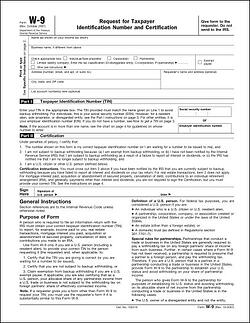
w9It's January and you're beginning to fill out your 1099-Misc forms, but you can't read the Tax ID number that your Independent Contractor wrote down for you. You know it's either a 5 or a 3 so you make your best guess. Unfortunately, it's going to come back to haunt you, and your contractor, in the form of backup withholding.

Backup withholding is withholding for federal income taxes on specific types of income and may be mandatory in certain circumstances.   Withholding is applied to the following types of income at a rate of 28%:

  • Interest
  • Dividends
  • Patronage Dividends
  • Rents
  • Royalties
  • Commissions & fees paid to independent contractors
  • Payments from brokers & bond transactions
  • Payments from fishing boat operators

Most taxpayers are exempt from backup withholding. You are exempt from withholding if you report your name and social security number to your payer on a Form W-9, and have not been notified by the IRS that you are subject to withholding. It is very important that this information matches what the IRS has on record for you. 

If the IRS receives 1099 information with an error on it, where the information given does not match the information that they have, backup withholding will be required. In the introductory example, you, the payer, would be required to initiate backup withholding for the independent contractor, as the tax identification number did not match the IRS record. You the payer, as well as the independent contractor would be notified by the IRS of the withholding requirement. 

To help make certain you get the correct tax information from your Independent Contractors, it is always best to ask for a complete W-9 when you initiate business.  You will get contact information, tax identification, and confirmation of withholding status.  For a more in depth look at Form 1099-misc and Form W-9, please take a look at our complimentary white paper, Form 1099-Misc, The Good, The Bad, and The Ugly!

Should you have any questions, the Tax Specialists at the Tax Office, Inc. are available to discuss your situation. Contact us for help with any and all tax forms you receive from the IRS.

Topics: Keith Huggett, 1099, IRS forms, W9